
Did you know that companies can spend thousands of dollars every month on cloud services without even realizing where the money goes? For businesses building modern tools, one of the biggest expenses is turning human speech into text. Whether you are building a smart assistant or a customer service bot, the bills can add up quickly.
This is where a voice recognition software API comes into play. It is a powerful tool that helps computers understand us, but if you do not manage it well, it can become very expensive. Every second of audio processed has a price tag attached.
If you are a developer or a business owner, learning how to save money while using these tools is a critical skill. In this guide, we will show you how to get the most value out of your technology while keeping your budget under control.
Table of contents
- What is a Voice Recognition Software API?
- Why is Speech API Cost Optimization Important for Your Business?
- How Does Usage Based Transcription Help Control Your Budget?
- What are the Best Strategies for Scaling STT Without Breaking the Bank?
- How Can Choosing the Right Infrastructure Reduce Voice AI Expenses?
- Does Audio Quality Impact Your Total Cost of Ownership?
- How Do You Compare Different voice recognition software API Providers?
- Why is Being Model Agnostic a Smart Financial Decision?
- Can Elastic SIP Trunking Save Money for High Volume Businesses?
- Conclusion
- Frequently Asked Questions (FAQs)
What is a Voice Recognition Software API?
A voice recognition software API is a digital bridge. It connects the sounds of a human voice to a computer program that can read and understand those words. Imagine you are at a busy airport and you need a translator to help you talk to someone who speaks a different language.
The API is that translator. It takes the “wiggly lines” of sound and turns them into actual text. This process is essential for things like voice agents, automated phone systems, and live captioning.
However, the “plumbing” required to get the voice to the translator is often very complex. This is where FreJun AI makes a huge difference. FreJun AI handles the complex voice infrastructure so you can focus on building your AI.
Instead of spending months building your own phone system or audio streaming tool, you can use FreJun to carry the voice data. This allows you to connect your chosen voice recognition software API to a phone call or a web app with ease. By focusing on the infrastructure, FreJun helps you avoid the high costs of building everything from scratch.
The Basic Workflow of Voice AI
To understand costs, you first need to see how the system works. First, a person speaks into a microphone. Second, the voice infrastructure captures that audio and streams it to the cloud. Third, the voice recognition software API processes the stream and gives back text.
Finally, an AI model decides what to do with that text. Each of these steps has a cost, but the processing of the audio is usually the most expensive part.
Why is Speech API Cost Optimization Important for Your Business?
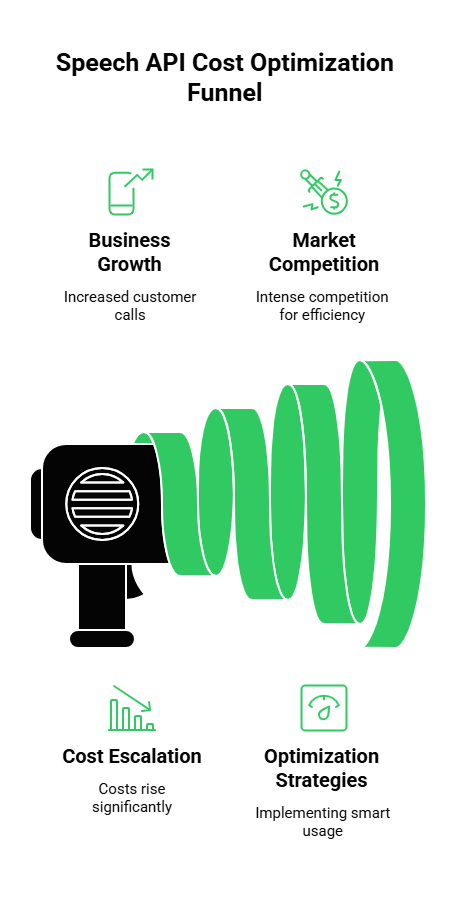
When you start small, the costs of an API might seem tiny. It might only cost a few cents to process a short call. But what happens when your business grows? If you have ten thousand customers calling at once, those few cents turn into thousands of dollars. This is why speech api cost optimization is a major priority for modern companies.
According to a report, the global market for speech recognition is expected to reach over 29 billion dollars by 2029. As the market grows, the competition for affordable and efficient processing becomes more intense. Without a plan for optimization, you might pay for things you do not need.
For example, some companies pay for a high level of accuracy that is not necessary for simple tasks. Others might pay for “always on” services when their customers only call during the day. By being smart about how you use your voice recognition software API, you can reduce your monthly bills by 30 percent or even more.
Preventing Resource Waste
Many developers leave their systems running even when no one is talking. This is like leaving all the lights on in an empty office building. Effective cost optimization means only using the API when there is actual speech to process. If the system can detect silence and stop the stream, it saves a lot of money. This is one way that smart infrastructure helps you keep your expenses low.
Also Read: How to Connect AgentKit Agents to Realtime Voice Calls Using Teler?
How Does Usage Based Transcription Help Control Your Budget?
One of the best ways to save money is to use a “pay as you go” model. This is often called usage based transcription. In this model, you only pay for the exact number of seconds or minutes that the voice recognition software API is actually working. You do not have to pay a flat monthly fee regardless of whether you use the service or not. This is perfect for businesses that have busy times and quiet times.
For example, a flower shop might get a lot of calls in February for Valentine’s Day. Under a flat fee model, they would pay the same high price in July when things are slow. With usage based transcription, their costs go down when the call volume drops. This flexibility makes it much easier to manage a business budget. It also allows you to test new features without committing to a giant contract.
The Benefit of Granular Billing
Usage based models often bill you by the second. This means if a customer only talks for 45 seconds, you only pay for 45 seconds. Some older systems would round up to the nearest minute, which means you would pay for 15 seconds of silence. Over thousands of calls, these small savings add up to a significant amount of money.
Ready to start building your voice agents with a cost effective infrastructure? Sign up for FreJun AI and get your API keys to see how much you can save today.
What are the Best Strategies for Scaling STT Without Breaking the Bank?
As your app becomes popular, you need to think about scaling stt (Speech to Text) efficiently. Scaling means your system can handle more work without falling apart or getting too expensive. If you simply double your users, you do not want your costs to double as well. You want to find ways to make the system more efficient as it grows larger.
One strategy is to use different types of models for different tasks. You might use a cheap and fast voice recognition software API for basic commands like “Yes” or “No.” Then, you could use a more expensive and highly accurate model for complex medical or legal discussions. This “layered” approach ensures you are only paying for high quality when you truly need it.
Batch Processing vs Real Time
Another way to save money during scaling is to decide what needs to happen right now and what can wait. Real time processing is expensive because it requires a lot of computer power to be ready at any moment. If you are transcribing a recorded meeting, you can use batch processing. This allows the API to work on the file when the servers are not busy, which is usually much cheaper.
How Can Choosing the Right Infrastructure Reduce Voice AI Expenses?
The platform you choose to carry your voice data has a huge impact on your wallet. If the infrastructure is clunky or slow, it can cause the voice recognition software API to make mistakes. When the API makes mistakes, it often has to try again, which costs more money. This is why a low latency and reliable platform is a financial asset.
FreJun AI is a voice infrastructure platform designed for this exact purpose. It handles real time call streaming and telephony so you can focus on the logic.
Because FreJun is optimized for speed and clarity, the audio it sends to your chosen API is of the highest quality. This leads to better accuracy on the first try, which reduces the need for expensive retries. By being the “voice transport layer,” FreJun AI ensures that every penny you spend on your API is used effectively.
The Role of Developer Tools
FreJun provides a developer first toolkit. This includes comprehensive SDKs for both client side and server side development. When developers have the right tools, they spend less time fixing bugs and more time optimizing their code. Better code leads to more efficient use of the voice recognition software API, which eventually leads to lower bills for the company.
Does Audio Quality Impact Your Total Cost of Ownership?
It might seem like a small detail, but the quality of the audio you send to a voice recognition software API is a major cost factor. If the audio is fuzzy or has a lot of background noise, the API has to work much harder. Some APIs even charge more for “noisy” audio because it takes more processing power to clean it up.
High quality audio capture is one of the core strengths of FreJun AI. The platform is built to capture raw audio and stream it without any loss of quality. This means the API gets a perfect digital copy of the speaker’s voice. When the audio is clear, the accuracy goes up, and the cost of managing “bad data” goes down. This is a key part of speech api cost optimization that many people overlook.
Accuracy and Customer Satisfaction
Beyond just the API bill, poor audio quality can cost you customers. If a voice bot constantly asks a customer to “Please repeat that,” the customer will get frustrated and hang up.
A lost customer is much more expensive than a few cents of API usage. By using FreJun Teler to ensure high quality voice streaming, you protect both your budget and your reputation.
Also Read: AI Voicebot for Power Outage Reporting
How Do You Compare Different voice recognition software API Providers?
Not all APIs are created equal. Some are built for speed, while others are built for perfect accuracy. When you are looking for a provider, you need to look at more than just the price per minute. You need to look at the “Total Cost of Ownership.” The following table shows some of the factors you should consider when making your choice.
| Feature | Low Cost Provider | Premium Provider | Strategic Model Agnostic Path |
| Price per Minute | Very Low | High | Variable (Best of both worlds) |
| Latency | High (Slower) | Low (Faster) | Lowest (Infrastructure driven) |
| Accuracy | 75% to 80% | 95%+ | Customizable per task |
| Flexibility | Locked into one model | Locked into one model | Full freedom with FreJun AI |
| Reliability | Basic | Enterprise Grade | Enterprise Grade with Teler |
| Setup Complexity | Easy | Complex | Fast with Developer SDKs |
By using a model agnostic platform like FreJun AI, you do not have to pick just one provider. You can switch between them based on which one is offering the best price or the best features at any given moment. This flexibility is a powerful way to stay on top of speech api cost optimization.
Why is Being Model Agnostic a Smart Financial Decision?
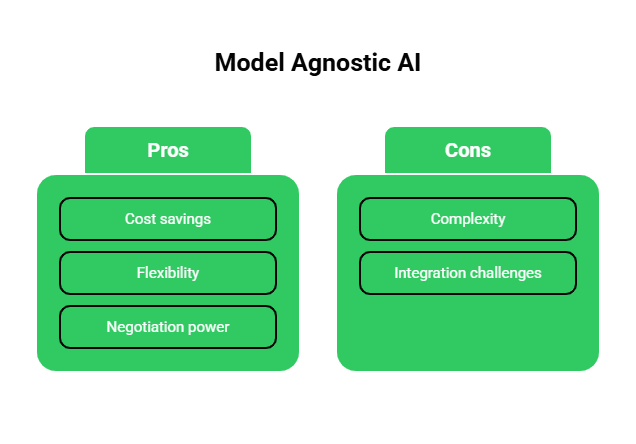
In the world of AI, things change every week. A new voice recognition software API might come out tomorrow that is twice as fast and half the price of what you use today. If your system is “locked in” to one provider, you cannot take advantage of those savings. You are stuck with the old, expensive technology.
FreJun AI allows you to be model agnostic. This means you bring your own STT (Speech to Text), LLM (Large Language Model), and TTS (Text to Speech) services. FreJun acts as the plumbing that connects them all.
If a new API becomes cheaper, you can simply swap it out in your code without having to rebuild your entire voice system. This freedom keeps your costs as low as possible as the technology continues to improve.
Avoiding Vendor Lock In
Vendor lock in is a major problem for many enterprises. It happens when a company makes it very difficult for you to leave their service. They might use a unique data format or charge high fees for moving your data.
By using FreJun AI as your neutral infrastructure layer, you keep the power in your own hands. You can negotiate better prices because the providers know you can switch at any time.
Can Elastic SIP Trunking Save Money for High Volume Businesses?
For companies that handle a massive number of calls, the cost of phone lines can be just as high as the API costs. Traditional phone systems often require you to pay for a fixed number of lines even if you do not use them all the time. This is where a feature like elastic SIP trunking comes in.
FreJun Teler provides elastic SIP trunking as part of its enterprise grade reliability. This technology allows your phone system to expand and shrink automatically. If you have a huge rush of calls during a holiday, the system adds more capacity.
When the rush is over, the capacity disappears, and you stop paying for it. This ensures that you are never paying for “empty air” on your phone lines. It is a perfect companion to scaling stt because both parts of your system become more efficient as you grow.
Global Coverage and Uptime
Another financial benefit of elastic SIP trunking is that it is geographically distributed. This means your calls are always routed through the closest and most efficient path. This reduces the cost of long distance data travel and ensures high availability. If one part of the network goes down, the system instantly finds a new path, preventing costly downtime for your business.
Also Read: Handling Billing Queries with Voice AI
Conclusion
In conclusion, a voice recognition software API is an incredible tool that allows businesses to interact with customers in a whole new way. However, without a clear plan for cost optimization, the expenses can quickly spin out of control.
By focusing on usage based transcription, scaling stt efficiently, and choosing a model agnostic infrastructure like FreJun AI, you can build powerful voice agents that are also financially sustainable. Remember that the quality of your infrastructure is just as important as the quality of your AI.
FreJun handles the complex telephony and real time streaming, giving you the perfect “plumbing” to connect your chosen AI tools. This approach reduces waste, improves accuracy, and ensures that your business is ready for the future of voice technology.
By following these strategies, you can enjoy all the benefits of voice AI without breaking your budget.
Want to discuss your specific use case and see how FreJun Teler can help you optimize your voice expenses? Schedule a demo with our team today.
Also Read: Telephone Call Logging Software: Keep Every Conversation Organized
Frequently Asked Questions (FAQs)
The most expensive part is usually the actual processing of the audio data. Most providers charge by the second or minute. If you have very long calls or high volume, these costs can become very large if not managed properly.
You can start by implementing silence detection. This ensures you are not sending audio to the voice recognition software API when no one is talking. You can also look into usage based transcription models to ensure you only pay for what you actually use.
No, that is the beauty of FreJun AI. It handles the telephony layer for you. You can connect your AI models to FreJun, and it will manage the calls and the audio streaming so you do not have to build that infrastructure yourself.
Model agnostic means you can switch between different AI providers easily. This allows you to hunt for the best prices and take advantage of new, cheaper technology as soon as it becomes available. It prevents you from being locked into an expensive contract with one vendor.
Yes. Noisy audio can lower the accuracy of a voice recognition software API, leading to more retries or the need for more expensive, advanced models. Clear audio from a reliable platform like FreJun AI helps keep these costs down.
Elastic SIP trunking is a feature of FreJun Teler that allows your voice capacity to grow or shrink based on your needs. You only pay for the capacity you use, which is a great way to save money if your call volume changes throughout the day or year.
Low latency means the conversation happens faster. This reduces the total time of the call. Since many APIs charge by the second, shorter and more efficient calls lead directly to lower monthly bills.
Usually, yes. Batch processing allows the API provider to work on your files when their servers are not busy. However, for things like voice assistants or live customer support, you must use real time processing to keep the conversation natural.
Yes. FreJun AI powers both inbound calls like AI receptionists and outbound calls like lead qualification or appointment reminders. Its infrastructure is designed to handle both efficiently.
Yes. FreJun is engineered with security by design. It uses robust protocols to protect data integrity and confidentiality. This ensures that while you are optimizing costs, you are also protecting your customers’ privacy.