
Have you ever called a business, explained your entire situation to one person, only to be transferred to another department where you had to start all over again? It’s a frustrating experience that leaves customers feeling unheard and unimportant. Now, imagine this scenario in the fast paced world of real estate.
A motivated buyer calls about a new listing, but they get stuck in a phone tree or routed to an agent who knows nothing about the property. By the time they reach the right person, their excitement has turned into annoyance. This common problem highlights the urgent need for better inbound call handling solutions.
Today, every call is a valuable opportunity. A single misdirected call can mean a lost sale. Thankfully, technology offers a powerful answer: smart call routing.
This intelligent approach ensures that every caller connects with the right agent at the right time, creating a seamless experience for buyers and a more efficient workflow for agents. This article will explore how smart call routing is revolutionizing real estate communication.
Table of contents
What Exactly Is Smart Call Routing?
Smart call routing is an advanced method of directing incoming calls to the most suitable person or department based on predefined rules and real time data. Think of it as a super intelligent receptionist who instantly knows who you are, what you need, and exactly who can help you.
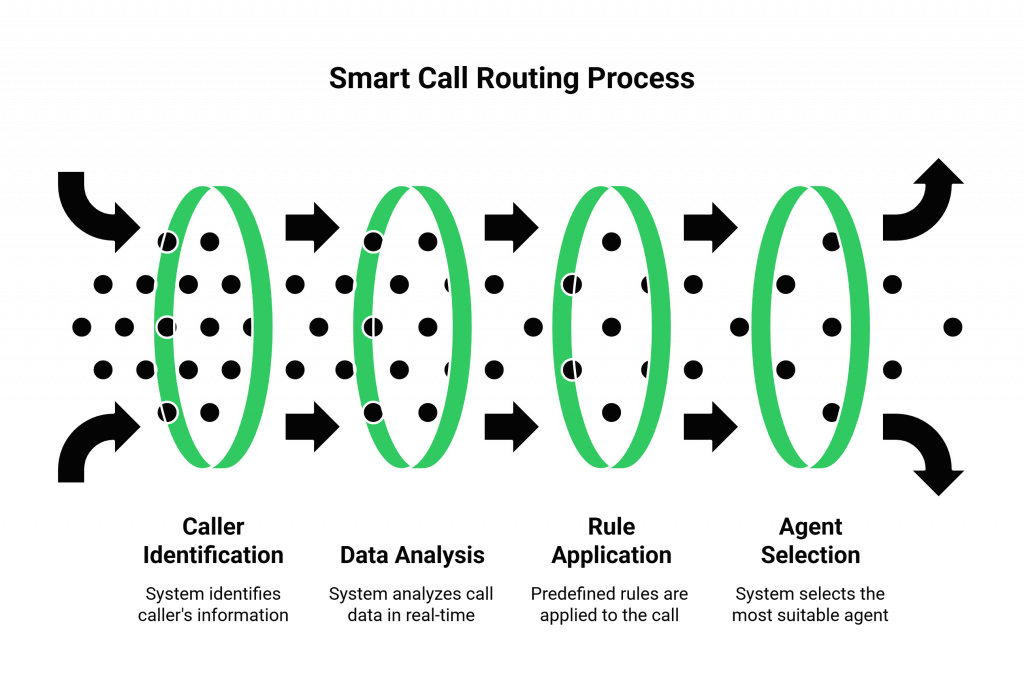
Unlike traditional phone systems that simply send calls to the next available agent or let them ring endlessly, a smart system analyzes information about the call before it even gets answered. This could be the caller’s phone number, the time of day, or their responses to a simple automated question.
This technology is a cornerstone of modern inbound call handling solutions, moving beyond basic call forwarding to create a truly intelligent communication hub. It’s about being strategic, not just reactive, with every phone call.
Why is Traditional Call Handling Failing in Real Estate?
The old way of managing calls simply can’t keep up with the demands of the modern real estate market. Both buyers and agents suffer from the inefficiencies of outdated systems, leading to missed opportunities and immense frustration.
For buyers, the experience can be a nightmare. Long hold times are common, and being transferred multiple times is almost expected.
A shocking 72% of consumers say that having to explain their problem to multiple people is a sign of poor customer service. When a buyer has to repeat which property they are interested in to three different people, their confidence in the agency plummets.
For agents, the situation is just as challenging. They waste precious time answering calls that are not meant for them, such as a query about a rental property when they only handle sales.
This not only distracts them from pursuing qualified leads but also clogs up the phone lines, preventing serious buyers from getting through. Here is a simple comparison of traditional versus smart call routing:
| Feature | Traditional Call Routing | Smart Call Routing |
| Call Distribution | Sends calls to the next available agent or in a fixed order. | Routes calls based on agent skills, property knowledge, or CRM data. |
| Caller Experience | Often involves long wait times and multiple transfers. | Connects callers to the right agent on the first try. |
| Agent Efficiency | Agents spend time on irrelevant or misdirected calls. | Agents receive pre qualified calls relevant to their expertise. |
| Data Usage | Uses minimal data, often just the phone line status. | Leverages CRM data, caller history, and AI to make decisions. |
| Availability | Limited to business hours for effective handling. | Can provide 24/7 support with AI and route to on call agents. |
Also Read: How to Automate Lead Qualification Calls with AI?
How Do AI Powered Inbound Call Handling Solutions Work?
The “smart” in smart call routing often comes from artificial intelligence. AI elevates basic inbound call handling solutions into dynamic systems that can understand, predict, and act on a caller’s needs in real time.
The process is surprisingly straightforward. When a buyer calls, they are first greeted by an AI voice agent. This isn’t your old, clunky “press one for sales” system. This is a conversational AI that can understand natural language. It might ask, “Thanks for calling. Are you calling about a specific property or would you like to speak with an agent about a new search?”
Based on the caller’s spoken response, the AI gets to work. It can identify the property address mentioned, check the caller’s phone number against the customer relationship management (CRM) database to see if they are an existing client, and determine the exact purpose of the call. In seconds, it routes the call to the perfect person.
For instance, a call about “the house on Maple Avenue” is sent directly to that property’s listing agent. A call from a new buyer interested in a specific neighborhood is routed to an agent who specializes in that area.
For this seamless interaction to occur, the underlying technology has to be flawless. This is where a voice infrastructure platform like FreJun AI is essential. FreJun AI provides the high speed, low latency connection that allows the AI voice agent to hear, process, and respond without any awkward delays.
It acts as the “plumbing” that connects the telephony system to your AI models (your Speech-to-Text, LLM, and Text-to-Speech). FreJun AI handles this complex voice layer, so your development team can focus entirely on building the AI’s logic.
What Are the Tangible Benefits for Agents and Buyers?
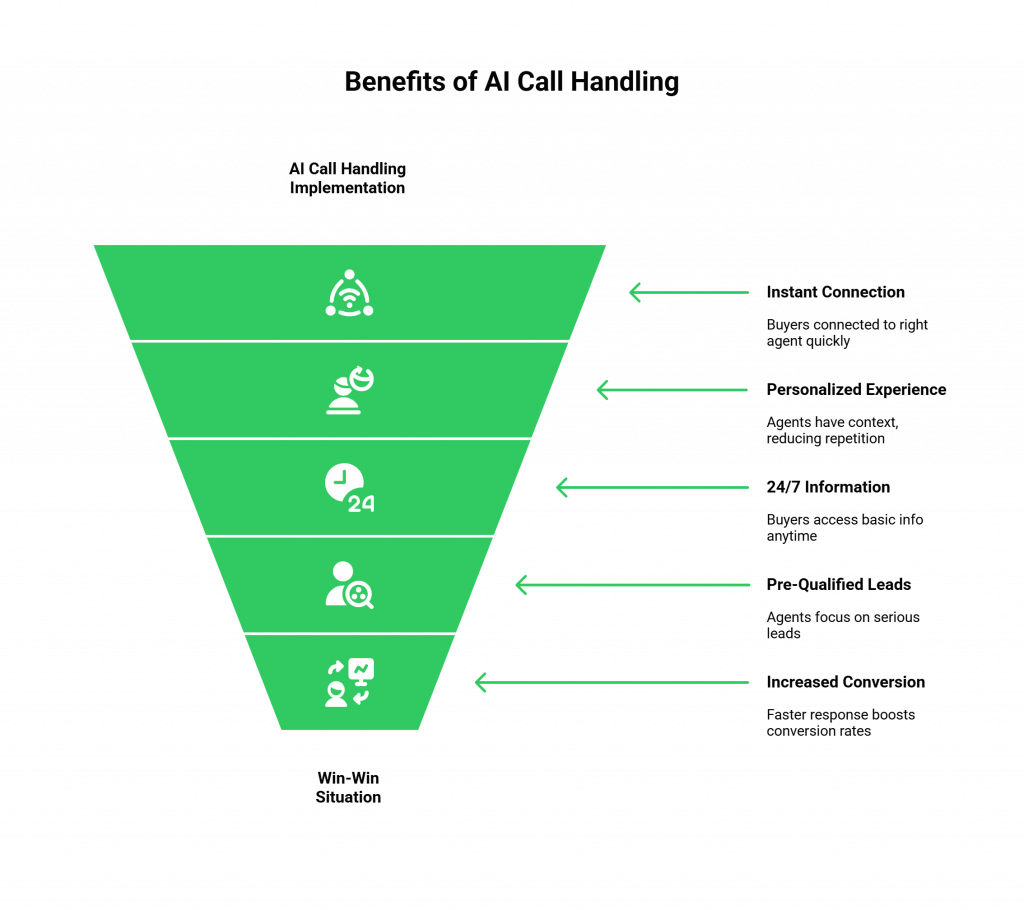
Implementing smart, AI powered inbound call handling solutions creates a win win situation. Both buyers and agents experience a dramatically improved process that saves time, reduces stress, and leads to better outcomes.
How Do Buyers Benefit?
Potential home buyers see immediate benefits. First, the system connects them to the right person almost instantly, eliminating the chance of getting lost in a phone system. Second, the experience feels personalized, as the agent already has context about their call, so buyers don’t have to repeat themselves.
This creates a positive first impression and builds trust from the very first interaction. Finally, with an AI front end, basic information is available 24/7, even outside of normal business hours.
How Do Agents Benefit?
Agents see a huge boost in their productivity. By receiving only relevant, pre qualified calls, they can focus their energy on serious leads. In real estate, speed is everything. Research shows that responding to a lead within the first minute can increase conversion rates by up to 391%.
Smart routing ensures that an agent who is available and knowledgeable gets the call instantly, maximizing the chance of conversion. This efficiency also reduces agent burnout and allows them to provide a higher level of service to their clients.
Ready to build an intelligent routing system that empowers your agents? Sign up for a FreJun AI developer account and get your API keys to start experimenting.
Also Read: Handling After-Hours Calls with AI Voicebot
How Can You Implement a Smart Call Routing System?
Setting up a smart call routing system might sound complex, but it can be broken down into a few manageable steps. The goal is to create a system that aligns with your specific business needs.
First, you need to define your routing logic. How do you want calls to be distributed? You could choose skill based routing (e.g., sending multilingual callers to agents who speak their language), property based routing (sending calls to the listing agent), or time based routing (directing after hours calls to a dedicated on call agent).
Next, you need to connect your data sources. Integrating your phone system with your CRM is crucial. This allows your routing system to recognize existing clients and access their history, providing valuable context for the agent who takes the call.
The third step is building the AI agent that will interact with callers. This involves choosing your preferred STT, LLM, and TTS providers to create the conversational brain of your system. The final and most critical step is deploying it on a reliable voice infrastructure.
This is where a platform like FreJun AI is indispensable. It provides the SDKs and model agnostic API needed to connect your AI to the telephony world, ensuring your inbound call handling solutions are not only smart but also stable, scalable, and secure.
Also Read: What to Expect from Enterprise-Grade Voice APIs?
Conclusion
The era of clumsy, inefficient phone systems in real estate is over. Smart call routing, powered by AI, is setting a new standard for communication. By intelligently connecting buyers with the right agents on the first try, this technology eliminates friction, enhances the customer experience, and boosts agent productivity.
It transforms a simple phone call from a potential point of frustration into a valuable opportunity to build a relationship and close a deal. For any real estate agency looking to gain a competitive edge, investing in modern inbound call handling solutions is no longer an option, it is a necessity for growth.
Interested in seeing how a powerful voice infrastructure can transform your customer communications? Schedule a demo with our team at FreJun Teler.
Also Read: Telephone Call Logging Software: Keep Every Conversation Organized
Frequently Asked Questions (FAQs)
Smart call routing automatically directs incoming calls to the right person or department using caller data, AI responses, or CRM information.
Traditional systems route calls sequentially, while smart systems use AI and data to instantly connect callers with the agent best suited for their inquiry.
AI, particularly conversational AI, acts as the first point of contact. It can understand a caller’s spoken request, gather necessary information, and then use that context to route the call to the correct agent, making the process much more efficient.
While technical knowledge helps, developer-first platforms like FreJun AI simplify implementation, offering SDKs and infrastructure so you can focus on AI logic instead of telephony.
Yes, modern inbound call handling solutions are designed to integrate seamlessly with popular CRM platforms. This integration is key to providing agents with valuable caller context and personalizing the experience.
For solo agents, smart routing is transformative: AI can pre-screen calls, answer basic inquiries, and schedule appointments, freeing time for high-value interactions.
Absolutely. Enterprise-grade platforms like FreJun AI build security in by design, using robust protocols to protect data integrity and confidentiality which is crucial when handling sensitive client information.
Yes. By using multilingual AI models for STT, LLM, and TTS, the system can identify a caller’s language and route them to an agent who is fluent in that language, providing a much better customer experience.
The system’s logic can be configured to handle this. It can route the call to a backup agent, send it to a specialized voicemail box, or offer the caller a callback from the agent once they are free.