
In the airline industry, change is the only constant. A business meeting gets moved, a family vacation is extended, or an unexpected event occurs, and suddenly, a passenger’s carefully planned itinerary needs to be altered. For an airline’s contact center, these change requests are one of the most common, most complex, and most time-consuming types of calls they handle.
The manual process of handling a flight change is a labyrinth of complexity. A human agent has to authenticate the passenger, look up the booking, navigate a complex reservation system to search for new flights, calculate the fare difference and any change fees, and then process the payment. This is a high-touch, error-prone process that can take a significant amount of time, leading to long queues and frustrated customers.
But what if you could automate this entire, complex workflow? What if you could provide every passenger with a 24/7, instant, self-service channel to manage their own flight changes? This is the power of a modern, transaction-focused AI voicebot. It’s a technology that is transforming one of the most challenging aspects of airline customer service into a fast, efficient, and seamless experience.
Table of contents
Why is the Manual Flight Change Process So Painful?
The traditional, human-powered process for handling flight changes is a major source of friction for both the airline and the passenger.
How Does It Create a High-Stakes Bottleneck?
Flight change requests are often urgent and time-sensitive. A passenger who needs to change their flight now will not tolerate waiting on hold for 45 minutes. This creates a high-stakes bottleneck in the call center.
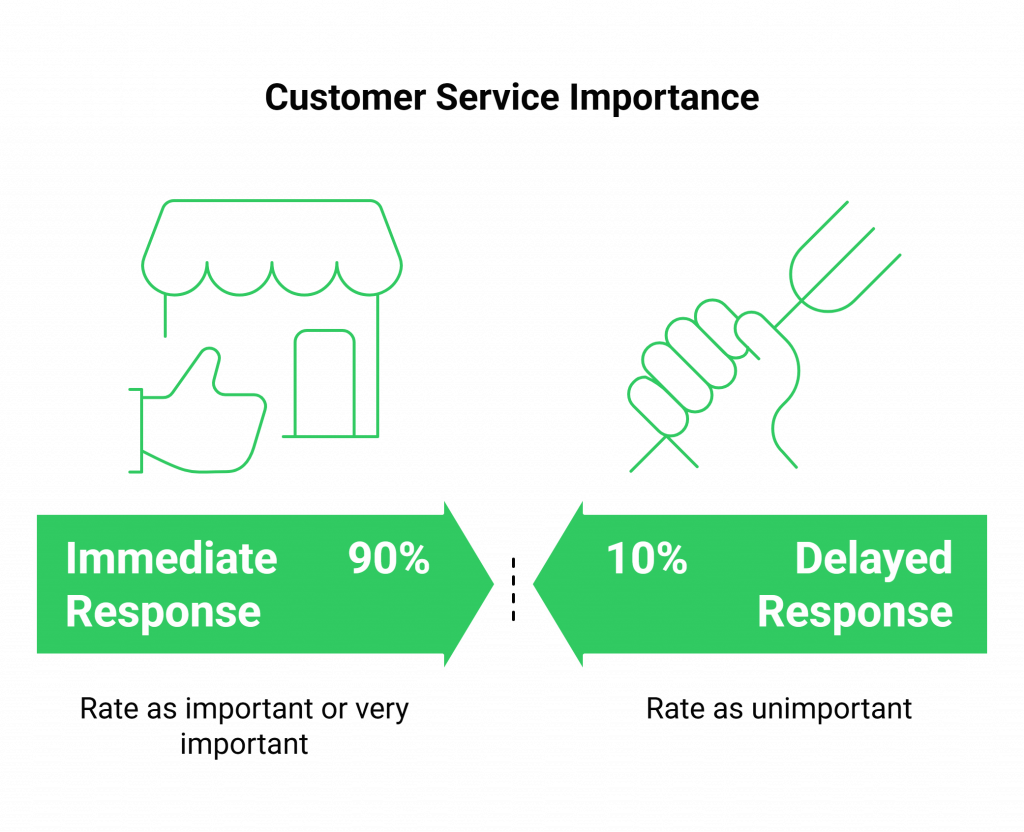
The demand for immediate service is not just a preference; it’s a core business requirement. A recent report from HubSpot found that 90% of customers rate an “immediate” response as important or very important when they have a customer service question.
What is the High Cost of Human-Powered Complexity?
Handling a flight change is a complex, multi-step process that requires a highly-trained agent. It’s one of the longest and most expensive types of calls an airline contact center handles.
When your most skilled and experienced agents are spending their day walking passengers through these routine changes, you are incurring a massive operational cost and failing to use your best talent for the truly exceptional, high-value customer issues.
Also Read: Multimodal AI Agents vs Single-Mode AI Agents
How Can an AI Voicebot Act as a “Perfect” Ticketing Agent?
A modern AI voicebot is not just a simple Q&A machine; it is a true “agent” that can be given the authority to execute complex, multi-step transactions. By being deeply integrated with the airline’s core reservation systems, it can become a 24/7, infinitely scalable, and perfectly accurate ticketing agent.
This advanced capability is built on a foundation of a modern, API-driven voice infrastructure. A platform like FreJun AI provides the essential, “always-on,” and globally reliable telephony layer that a global airline demands.
This is the high-performance “nervous system” that securely connects the passenger to your AI’s brilliant “brain” with the speed and clarity required for a seamless transactional experience.
What is the Step-by-Step Workflow of an Automated Flight Change?
Let’s walk through the conversation to see how an AI voicebot can handle this complex workflow from start to finish.
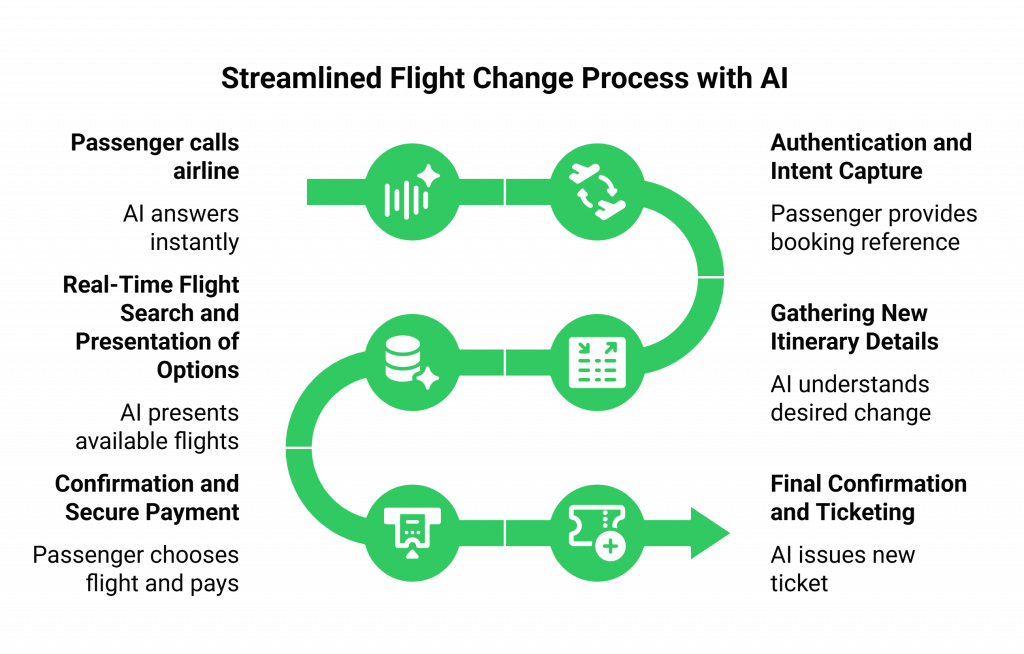
- Authentication and Intent Capture: A passenger calls the airline. The AI answers instantly.
- AI: “Thank you for calling Skyward Airlines. To get started, please say or enter your booking reference number.”
- Passenger: “It’s X-Y-Z-1-2-3.”
- AI (after an API call to the reservation system): “Thank you. I see you are calling about your booking to London for this Friday. I can help you change your flight, check your flight status, or add a service like an extra bag. What can I help you with today?”
- Passenger: “I need to change my flight.”
- Gathering the New Itinerary Details: The AI has a natural conversation to understand the desired change.
- AI: “I can help with that. Are you looking to change your flight to a different time on the same day, or to a completely different date?”
- Passenger: “I need to fly one day later, on Saturday.”
- Real-Time Flight Search and Presentation of Options: The AI makes a real-time API call to the airline’s booking engine to search for available flights on the new date. It then presents the options and any associated costs clearly to the passenger.
- AI: “Okay, I see two flights available on Saturday. There is a flight at 8 AM, and one at 6 PM. The 8 AM flight has a fare difference of $50, and the 6 PM flight has a fare difference of $75. There is also a $25 change fee for this ticket. Which flight would you prefer?”
- Confirmation and Secure Payment: Once the passenger makes a choice, the AI confirms the total cost and then securely collects the payment.
- AI: “Okay, you’ve selected the 8 AM flight. The total for the fare difference and the change fee will be $75. I can process that now with the credit card you have on file ending in 1234. Should I proceed with that?”
- Passenger: “Yes.”
- Final Confirmation and Ticketing: After the payment is processed, the AI makes the final API calls to cancel the old flight segment and issue the new ticket.
- AI: “Perfect. Your flight has been successfully changed. Your new departure time is this Saturday at 8 AM. I have just sent an updated e-ticket and a receipt to the email address on file. Is there anything else I can help you with?”
Ready to automate your most complex customer service calls? Sign up for FreJun AI and start building your AI ticketing agent.
Also Read: Voice Assistant Bot Platforms for SMBs
What is the Technology Stack that Powers this Workflow?
This powerful, transactional workflow is the result of a modern, “best-of-breed” architecture.
| Component | The Role in the Workflow | The Enabling Technology |
| The Voice Channel | Connects the passenger to the AI. | A high-performance, reliable voice infrastructure like FreJun AI. |
| The “Ears” & “Mouth” | Listens to the passenger and speaks the AI’s response. | High-quality, streaming STT and TTS models. |
| The “Brain” | Understands the user’s intent, manages the conversation, and calls the right tools. | A powerful LLM with strong “tool calling” capabilities (e.g., GPT-4o, Claude 3). |
| The “Hands” | The connection to the airline’s core systems. | Secure API integrations with the airline’s Passenger Service System (PSS), booking engine, and payment gateway. |
Also Read: How To Add Chatbot Voice Assistant Capabilities in Your Backend?
Conclusion
In the airline industry, a flight change request is a moment of truth. It is a complex, high-stakes interaction that can either be a source of immense customer frustration or an opportunity to deliver an impressively efficient and modern experience. The traditional, manual process is a bottleneck that is costing airlines a fortune in operational costs and customer goodwill.
The modern AI voicebot is a powerful and strategic solution. By automating the entire flight change workflow, an airline can provide an instant, 24/7, self-service channel that is not only dramatically more cost-effective but also provides the fast, seamless, and empowering experience that modern travelers demand.
Want to see a live demo of an AI voicebot handling a real-time flight change? Schedule a demo with our team at FreJun Teler.
Also Read: London Country Code and Dialing Format from the UAE
Frequently Asked Questions (FAQs)
An AI voicebot for this use case is a specialized conversational AI that can automate the entire process of a passenger changing their flight over the phone. It can authenticate the user, search for new flights, calculate fare differences, and process payments.
This is done through a secure API integration. The AI’s backend application makes real-time API calls to the airline’s Passenger Service System (PSS) or Global Distribution System (GDS) to fetch booking details and to make changes.
Yes, but it must be built on a security-first architecture. This includes strong passenger authentication, secure API integrations, and the use of PCI-compliant methods like DTMF (keypad tone) capture for handling credit card information.
The goal is to augment the human team. The AI voicebot is designed to handle the high volume of standard, routine flight changes. This frees up the highly-skilled human ticketing agents to focus on the most complex cases, such as multi-passenger, multi-leg international itineraries or high-value corporate accounts.
Yes. A powerful LLM with strong tool-calling capabilities can handle a wide variety of change types. The complexity it manages depends on the business rules you program into it and the capabilities of your booking engine’s API.